If you’re searching for information about IPTV in Australia, you’re probably trying to understand whether it’s a legitimate alternative to traditional pay-TV, what the legal risks are, and how much you’d actually pay for a reliable service. This guide cuts through the marketing hype to give you the facts.
IPTV (Internet Protocol Television) delivers TV channels through your internet connection instead of traditional cable or satellite. It’s grown massively in Australia over the past few years, but the market is confusing, with both legitimate services and illegal operations competing for your attention. If you’re entirely new to this, start by reading our beginner-friendly guide on what IPTV is.
This guide will help you understand what IPTV really is, distinguish legal services from illegal ones, evaluate actual costs versus promises, and make an informed decision based on your needs.
What is IPTV and how does it actually work?
IPTV stands for Internet Protocol Television. Simply put, it’s TV delivered over the internet rather than through traditional broadcast methods like satellite dishes or cable networks. According to Wikipedia’s technical definition, IPTV uses packet-switched networks to transmit television content.
The Technical Reality
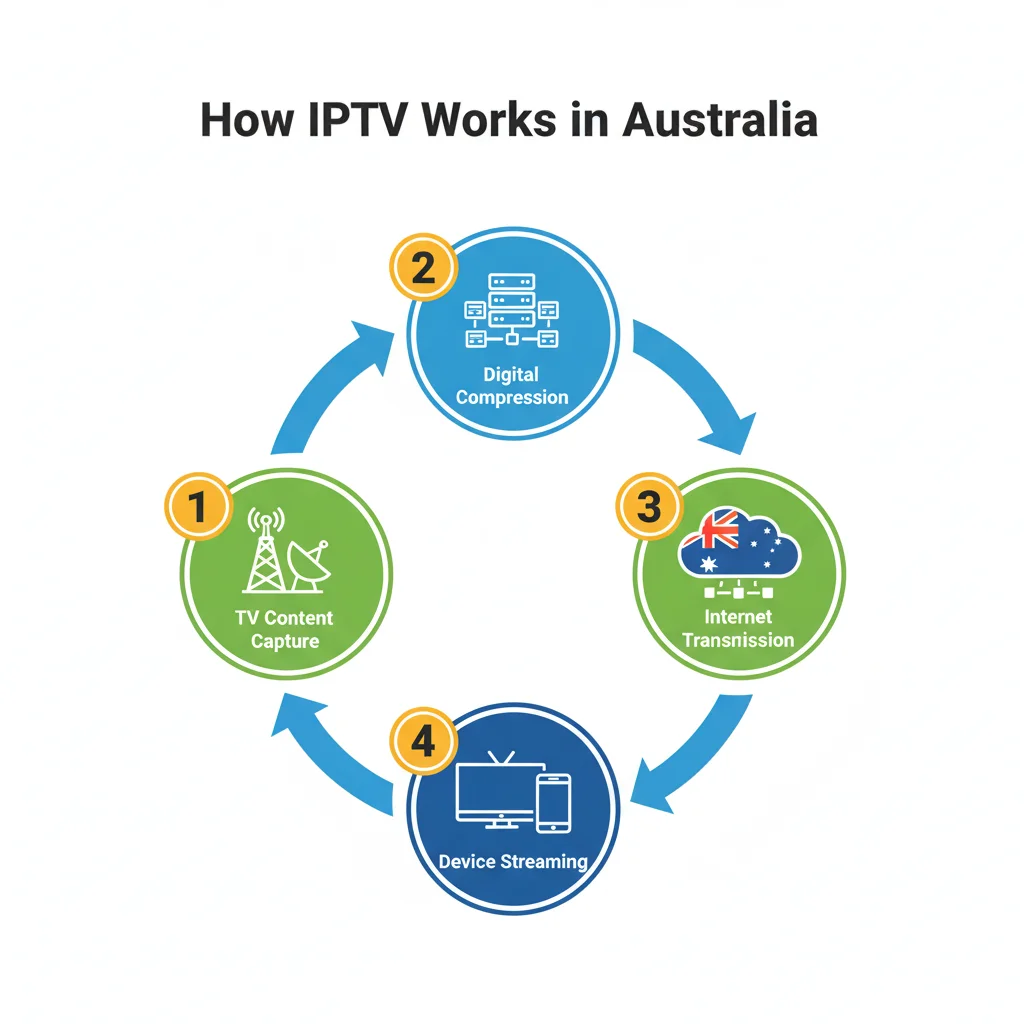
Here’s what actually happens when you watch IPTV:
1. Content is captured from broadcast sources or created by the provider
2. Video is encoded into digital format and compressed
3. Data is transmitted through internet networks as packets
4. Your device (Smart TV, IPTV box, phone) receives and decodes the stream
5. You watch the content in real-time or on demand.
The key difference from streaming services like Netflix is that IPTV typically provides live TV channels with scheduled programming, though many services now blend both live and on-demand content. For device-specific setup instructions, see our guides on IPTV setup for Smart TVs or on installing IPTV on Samsung Smart TVs.
IPTV vs Regular Streaming Services
Many people confuse IPTV with services like Netflix or Stan. Here’s the actual difference:
| Feature | IPTV | Streaming (Netflix/Stan) |
| Content Type | Live channels + scheduled programming | On-demand library |
| How You Watch | Channel guide, like traditional TV | Browse the library and choose what to watch |
| Sports | Live sports broadcasts | Sports documentaries only |
| Licensing | Varies widely (legal to illegal) | Fully licensed |
The confusion happens because many modern IPTV services now include on-demand libraries alongside live channels, blurring the distinction. For sports-specific IPTV options, refer to our comprehensive guide to IPTV for sports in Australia.
The Legal Reality of IPTV in Australia
This is where things get complicated and where most articles are deliberately vague. Let’s be crystal clear. For a comprehensive legal analysis, read our detailed guide on the legal status of IPTV in Australia.
What Makes IPTV Legal or Illegal in Australia
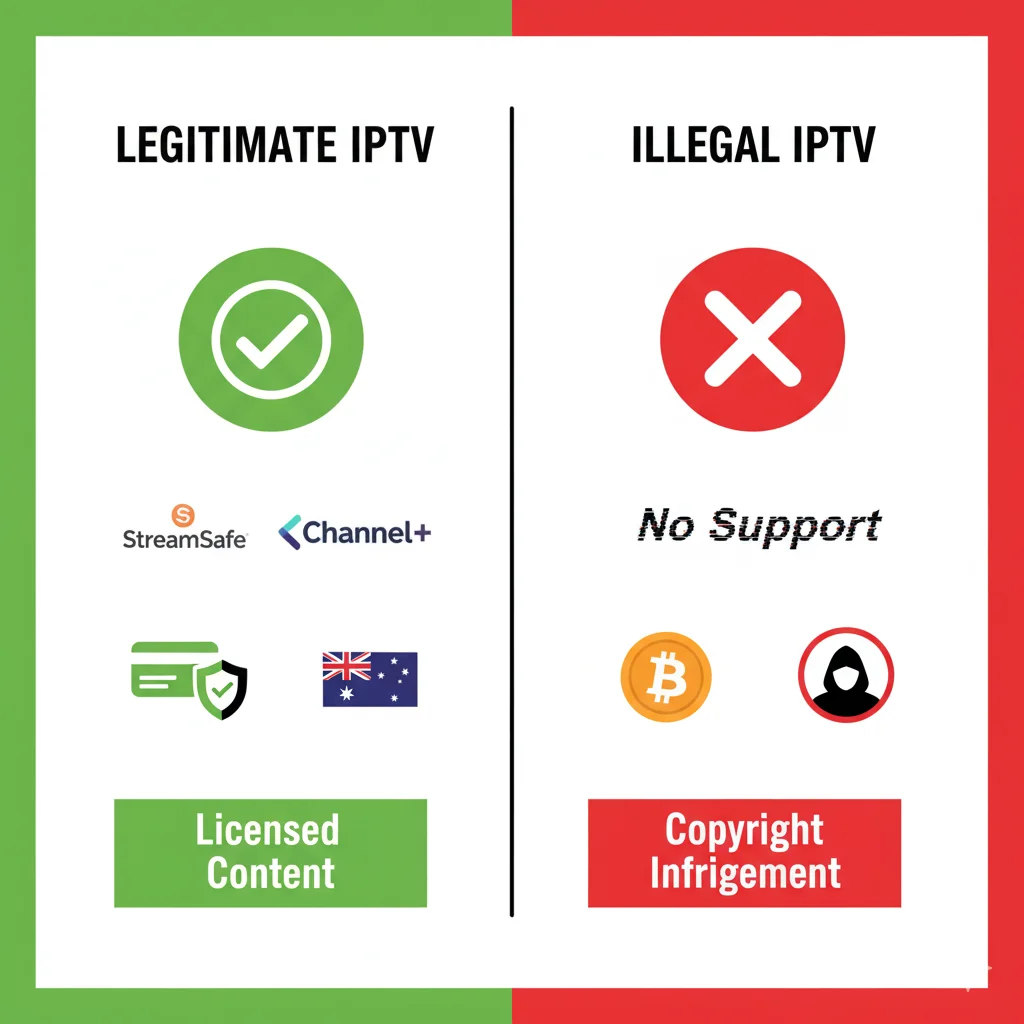
According to ACMA (Australian Communications and Media Authority) and the Copyright Act 1968, IPTV is legal when providers have proper licensing agreements with content owners. It’s illegal when they don’t. To understand whether a specific service is legitimate, see our list of safe legal IPTV providers in Australia.
Legal IPTV services in Australia:
• Foxtel Now / Kayo Sports – Fully licensed, operated by News Corp
• Fetch TV – Partnered with Australian ISPs and licensed content
• Optus Sport – Legitimate EPL broadcaster
• Free-to-air catch-up services – 7plus, 9Now, 10 Play, ABC iview, SBS On Demand
• Telstra TV – Aggregator platform for licensed services
These services have verifiable business registrations in Australia, publicly listed executives, and transparent licensing deals. For a detailed comparison of legal options, visit our IPTV comparison guide.
Red Flags for Illegal IPTV Services
If you see these warning signs, the service is almost certainly operating illegally:
• Unrealistic channel numbers: Claims like “10,000+ channels” or “all worldwide channels” for $15-30/month are physically impossible for a legal service. Broadcasting rights are expensive.
• Massive VOD libraries: “100,000+ movies and shows” at low prices. Netflix has around 5,000 to 6,000 titles globally and costs more than that.
• Premium sports bundles: EPL + AFL + NRL + international leagues, all in one cheap package. These rights cost millions individually.
• Suspicious payment methods: Only accepts cryptocurrency, gift cards, or PayPal Friends & Family (no buyer protection).
• No Australian business registration: Can’t locate them on ABN lookup or ASIC register.
• Vague about licensing: They won’t explain how they have rights to the content and use terms like “grey market” or “international sources.”
• Frequent service disruptions: URLs change, domains disappear, and servers go offline regularly.
Actual Legal Consequences in Australia
The Copyright Act 1968 and recent amendments provide for the following:
For users:
• Fines up to $117,000 for individuals
• Potential criminal prosecution in serious cases
• ISP warning notices under the Copyright Amendment Act 2015
• Possible internet monitoring if rights holders suspect piracy
Real enforcement: In 2022-2023, Australian Federal Police and the Federal Court blocked numerous illegal IPTV services. Several authorities arrested operators, and hundreds of thousands of subscribers lost access overnight with zero refunds.
While enforcement typically targets providers more than individual users, the risk is real and growing. To learn more about the legal landscape, refer to our article Is IPTV illegal in Australia?
What IPTV Actually Costs in Australia (Reality Check)
Let’s talk real numbers, not marketing promises. To see a detailed breakdown of pricing, refer to our comparison of IPTV packages.
Legal Services – Actual Pricing
| Service | Monthly Cost | What You Get | Reality |
| Kayo Sports | $25-35 | 50+ sports channels | Best for sports fans |
| Foxtel Now | $29-104 | Package-based channels | Expensive but comprehensive |
| Fetch TV | $0-10* | 50+ free channels | Often bundled with ISP |
| Optus Sport | $7-25 | EPL + UEFA | Football fans only |
| FTA Apps | Free | Local channels + catch-up | Start here! |
*Fetch TV often comes bundled free or heavily discounted with Optus and iiNet broadband packages
Why Cheap “Everything” Packages Don’t Exist Legally
Broadcasting rights in Australia are expensive because they’re sold exclusively:
• AFL rights: Seven Network and Foxtel pay $2.5 billion for 2025-2031
• NRL rights: Nine Network and Foxtel pay $2 billion for 2023-2027
• EPL rights: Optus pays around $50-60 million per season
• Movie studios: Charge per title, per viewer territory, per time period
No legitimate service can offer all this content for $15–30/month. The math simply doesn’t work. If someone claims they can, they’re either lying about what you’ll actually get or they’re streaming without paying for rights (which is illegal). If you’re looking for budget-friendly and legal options, our guide to affordable IPTV subscriptions in Australia is a valuable resource.
What You Actually Need: A Practical Approach
Instead of chasing one “magic” service, most Australians get better value by combining a few targeted options based on their actual viewing habits. For comprehensive service comparisons, visit our guide for IPTV service providers.
For Sports Fans
Realistic setup:
• Kayo Sports ($35/month): AFL, NRL, cricket, motorsports, international sports (see our best IPTV for sports guide)
• Free-to-air apps: Some AFL and NRL matches, international cricket (check our best IPTV apps guide)
• Add Optus Sport ($25): Only if you watch EPL regularly
Total: $35-60/month depending on football preference
For Families
Realistic setup (see our family-friendly IPTV guide):
• Free-to-air apps: Kids’ shows, news, local drama
• Netflix Standard ($16.99): International content, originals
• Disney+ ($13.99): Kids’ content, Marvel, Star Wars
Total: $31-45/month (or rotate subscriptions seasonally)
For Budget-Conscious Viewers
Free options:
• 7plus, 9Now, 10 Play: Live TV + 30 days catch-up
• ABC iview: Australian content, documentaries
• SBS On Demand: International films and series (subtitled)
Add one rotating paid service ($10-20/month) for variety
Total: $0-20/month (explore monthly IPTV plans for flexible options)
Technical Requirements: What You Actually Need
Internet Speed
According to NBN Co, here’s what you really need:
• SD quality: 3-5 Mbps
• HD quality: 8-10 Mbps
• 4K quality: 25+ Mbps
• Multiple streams: Multiply by number of simultaneous viewers
Important: Test your speed during peak hours (7-11 PM), not midday. Many Australians on NBN50 plans experience slowdowns during evenings, which affects streaming quality. If you’re experiencing buffering issues, check our comprehensive guide on how to fix IPTV buffering in Australia.
Devices
Legal services work on the following:
• Smart TVs: Samsung, LG, Sony (2018 or newer for best app support) – see our Smart TV setup guide
• Streaming devices: Apple TV ($219), Chromecast ($99), Fire TV Stick ($79) – check our Fire Stick guide
• Set-top boxes: Android boxes (see our best IPTV set-top boxes guide)
• Mobile apps: iOS and Android smartphones/tablets (explore IPTV apps for Android TV)
• Game consoles: PlayStation and Xbox (limited app selection)
If you have an older TV (pre-2018), a Fire TV Stick or Chromecast is the cheapest way to get modern streaming apps. For comprehensive device comparisons, see our guide to the 4 best IPTV boxes.
Common Problems and Honest Solutions
Buffering and Quality Issues
Most common causes:
1. WiFi congestion: Use Ethernet cable to the smart TV/streaming box if possible
2. Peak hour slowdowns: NBN network congestion 7-11 PM, especially on older infrastructure
3. Inadequate plan: NBN25 struggles with HD, especially with multiple devices
4. Distance from router: WiFi weakens through walls; consider mesh system for large homes
For step-by-step solutions, read our detailed guide on fixing IPTV buffering or explore our best IPTV with no buffering options.
Service Disappears Overnight
This issue happens regularly with illegal IPTV services. Authorities shut them down, URLs change, or operators simply disappear with your money. There’s no recourse because:
• They’re not registered businesses
• You paid through untraceable methods
• No consumer protection applies to illegal services
With legal services, you have Australian Consumer Law protection, can dispute charges with your bank, and have recourse through ACMA if needed.
The VPN Question: What It Actually Does
Many IPTV articles push VPNs aggressively. Here’s the honest truth. For comprehensive information, read our guide on using IPTV with a VPN in Australia.
What VPNs Actually Do
• Hide your activity from your ISP: They can’t see what you’re streaming
• Encrypt your connection: Useful on public WiFi
• Change your apparent location: Can access geo-blocked content
• Add privacy layer: Reduces tracking
What VPNs DON’T Do
• Make illegal streaming legal: Using a VPN to access pirated content is still illegal
• Protect you from prosecution: Determined authorities can work around VPNs
• Fix buffering: VPNs often slow connections, not speed them up
• Guarantee anonymity: VPN providers can be compelled to provide logs
Legitimate use: If you subscribe to Australian services and travel overseas, a VPN lets you access content you’ve already paid for. This is a grey area legally but rarely prosecuted.
The Bottom Line: What You Should Actually Do
After cutting through all the marketing noise, here’s the honest recommendation:
Start with free options:
1. Install all free-to-air apps (7plus, 9Now, 10 Play, ABC iview, SBS On Demand)
2. Watch for a month and see what you’re missing
3. Only then add paid services for specific needs
If you need additional information, check our premium IPTV providers’ guide.
• Sports fans: Kayo Sports ($35) is the most comprehensive legal option
• Movie/series fans: Rotate Netflix/Disney+/Binge monthly ($10-20)
• Everything: Combine 2-3 services based on what you actually watch
• ISP bundle: If you have Optus/iiNet, check if Fetch TV is included
Avoid:
• Services promising “everything” for $15-30/month
• Providers you can’t verify through ABN lookup
• Services only accepting cryptocurrency or gift cards
• Anything that seems too good to be true
The reality is that legitimate streaming in Australia costs $30 to $80 per month, depending on your needs. That’s frustrating compared to the $15-30 illegal services promise, but it’s the actual cost of content that’s properly licensed. The alternative risks fines, prosecution, service disruption, and supporting criminal operations.
Make your choice with eyes open, not based on marketing promises that can’t be delivered legally. For more detailed information, you can explore our complete IPTV Australia 2026 guide or check our IPTV subscription guide.
If you want to test legal services risk-free, explore our free IPTV trials guide to find services offering trial periods.
Frequently Asked Questions
Is all IPTV illegal in Australia?
No. IPTV is just a technology for delivering TV over the internet. Services like Kayo Sports, Foxtel Now, Fetch TV, and Optus Sport are completely legal IPTV services with proper licensing. What’s illegal is streaming copyrighted content without permission from rights holders.
Can I get in trouble just for watching illegal IPTV?
Yes, though enforcement has historically focused more on providers than users. Under Australian copyright law, users can face fines up to $117,000. While prosecution of individual viewers is rare, the risk is real and increasing as rights holders become more aggressive. You may also receive warning notices from your ISP.
Why are illegal IPTV services so much cheaper?
This is because they don’t pay for broadcasting rights. Legal providers pay millions for sports rights, movie licenses, and channel distribution. Illegal services simply steal streams and rebroadcast them. They can charge less because they have virtually no content costs, but the practice of charging less is copyright infringement.
What internet speed do I need for IPTV?
For SD: 3-5 Mbps. For HD: 8-10 Mbps. For 4K: 25+ Mbps. These are per stream, so multiply by how many people watch simultaneously. Most Australians on NBN50 or better plans can handle HD streaming comfortably, though peak hour congestion (7-11 PM) can cause issues on older NBN infrastructure.
Will a VPN protect me from legal consequences?
Not reliably. VPNs add a privacy layer and can hide your activity from your ISP, but they don’t make illegal activity legal. Determined authorities can work around VPNs through various methods. VPNs are better thought of as privacy tools for legitimate purposes (like accessing services you’ve paid for while travelling) rather than shields for piracy.