
Is IPTV safe: checking a streaming device and payment before you buy
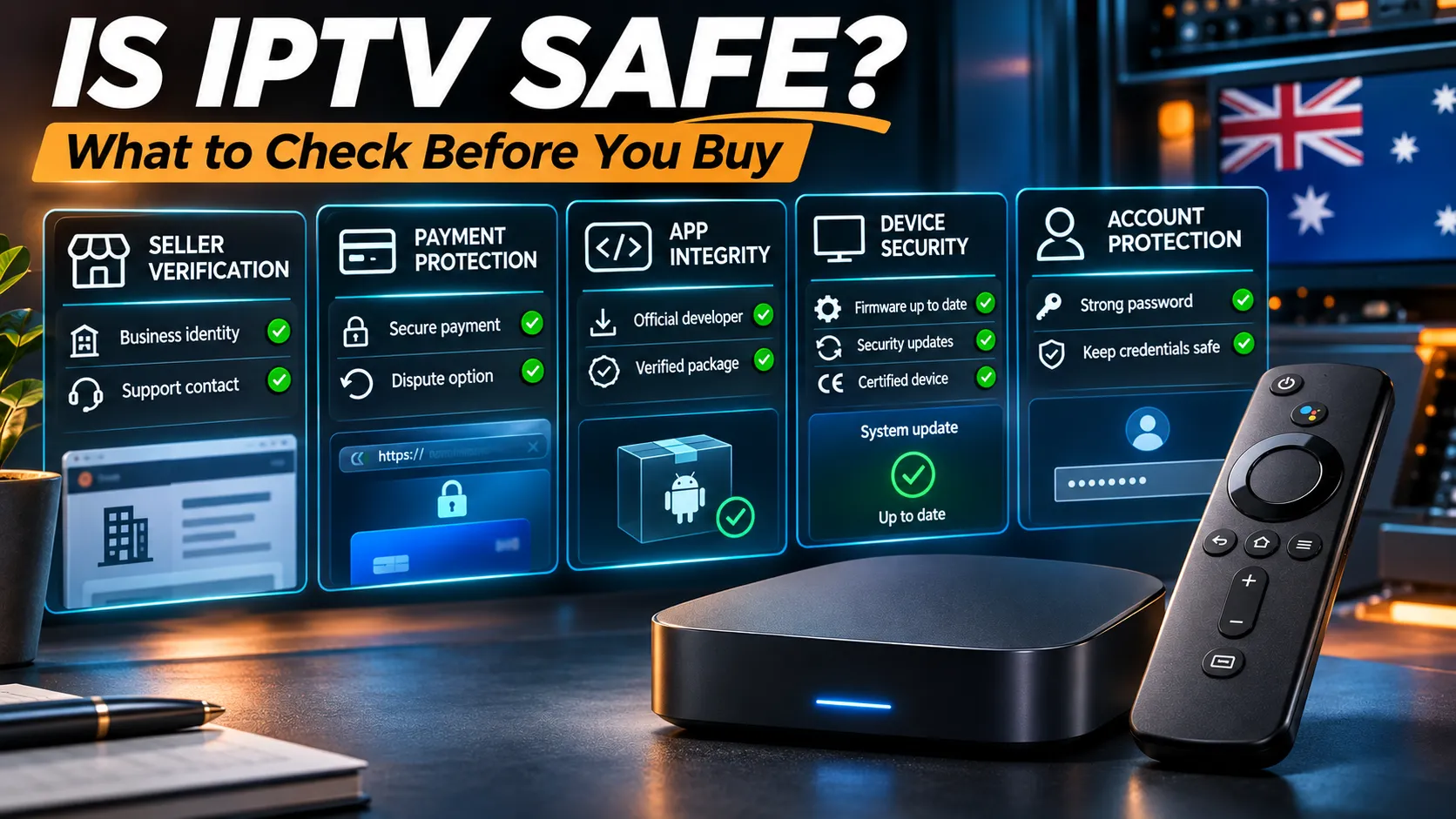
Is IPTV safe? The technology itself is: IPTV is simply a way of delivering TV over the internet, and many mainstream services use it. Whether a particular IPTV service is safe for you depends on five things: who you buy from, how you pay, which app you install, which device you use and how you protect your login. A seller you can contact, a payment you can dispute, apps from official stores and a certified device keep most of the risk low.
This guide sets out the main risks, what isn’t clear-cut, a checklist to work through before you buy, and what to do if something goes wrong. It is general information, not legal or financial advice.
Is IPTV Safe? The Short Answer
The technology isn’t the risk. Internet-delivered TV is used by many well-known services in Australia. The risks come from the decisions around a service:
- The seller: whether they are reachable, accountable and still around next month.
- The payment: whether you have any way to dispute a charge if something goes wrong.
- The app: whether it comes from an official source or a modified copy.
- The device: whether it is certified, updated and electrically safe.
- Your account: whether your login and personal details are protected.
Checking these five areas can reduce your exposure to common risks, but it cannot guarantee that a service is safe or reliable.
The Main IPTV Risks
There are six main IPTV risks. The table sums them up, and each one is explained below.
| Risk | What it looks like | What to check | Where to get help |
|---|---|---|---|
| Seller disappears | A long, very cheap subscription, then no reply after payment | A contact channel that answers, and written terms | Your bank, Scamwatch |
| Payment you can’t dispute | Crypto, gift cards or a bank transfer to an unknown party | Whether your payment method lets you dispute a charge | Your bank or card provider |
| Modified app | “Premium unlocked” or “pre-configured” apps from websites | The device’s app store, or the developer’s own site | — |
| Unsafe device | Uncertified or “fully loaded” boxes | The RCM mark, and Play Protect certification on Android boxes | The seller’s return policy |
| Exposed account | Reused passwords, or a playlist link shared with others | A unique password, and access details kept private | IDCARE |
| Service stops | The service disappears without notice | Ask the provider how it is authorised to supply its content | Consumer guarantees (ACCC) |
Sellers who take payment and disappear
Some sellers exist only to take a payment. They advertise long subscriptions at very low prices, collect the money and then stop answering, or the service stops working within days. Because these sellers often have no business address, no written terms and no real support channel, there is usually no one left to ask for a refund.
Payment methods with little buyer protection
How you pay decides what you can do if something goes wrong. Some payment methods give you a way to dispute a charge, depending on your card or account terms.
Others are very hard to reverse. Moneysmart, the Australian government’s financial guidance service, notes that money lost through crypto transactions can be hard to recover. Paying an unknown party by bank transfer or gift card carries a similar problem: once the money has gone, getting it back can be difficult.
None of this makes any payment method dishonest in itself. The point is to know, before you pay, whether you would have any way to dispute the charge.
Modified apps and malware
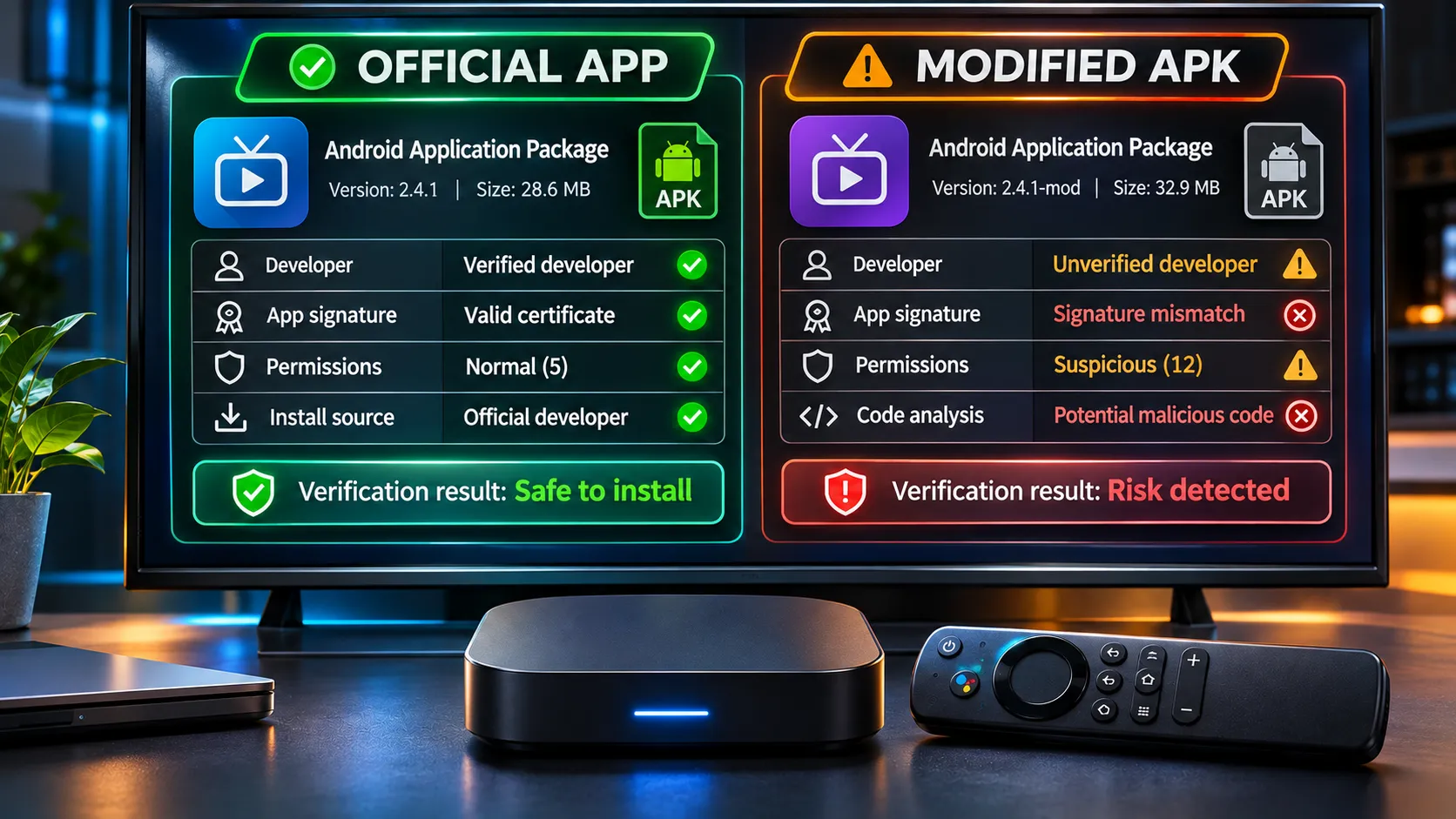
Some sellers supply their own versions of popular player apps, or send you to download “premium unlocked” copies from unofficial websites.
Modified apps can contain malware that exposes your logins or uses your network without your knowledge. Low-cost uncertified streaming boxes carry a similar risk: in 2025 the FBI warned that uncertified streaming devices were being infected with BADBOX 2.0 malware, sometimes before they even reached the buyer.
Uncertified boxes and electrical safety
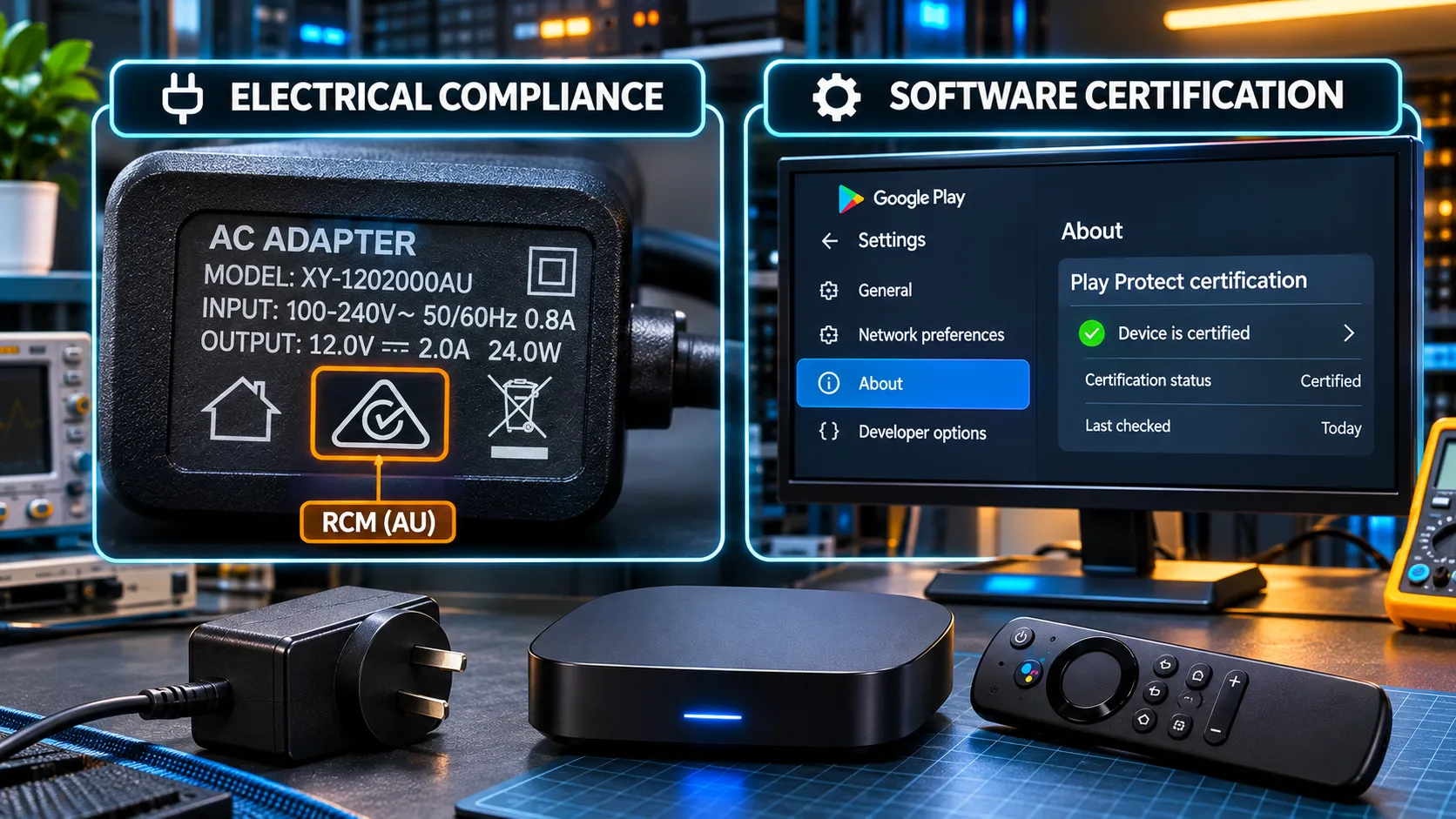
Under Australia’s Electrical Equipment Safety System, in-scope electrical equipment must not be sold unless it is marked with the RCM, the Regulatory Compliance Mark. A streaming box or power adapter imported without it may not have been checked against Australian electrical safety requirements.
The RCM concerns electrical and regulatory compliance. It says nothing about the software on a device, so an RCM-marked box can still carry unsafe apps.
Check for both: the mark on the hardware, and an official source for the software.
For Android TV and Google TV boxes, also check Google’s Play Protect certification. Google says that devices that aren’t Play Protect certified may not be secure and may not receive Android system or app updates. You can check the status in the Google Play Store app, under Settings > About.
Account and personal data exposure
An IPTV account usually links your name, email address and payment details. Sharing your login widely, reusing a password you use elsewhere, or handing details to a seller with no privacy policy all increase the chance that this information ends up where it shouldn’t.
Your access details also work like a key to your subscription: many M3U playlist links contain your username and password inside the address.
The Australian Cyber Security Centre recommends strong, unique passwords and multi-factor authentication where they’re available, and watching for warning signs such as unexpected password resets or logins you don’t recognise.
Services that stop without notice
Content rights are another factor to consider. A service that lacks the necessary rights to distribute its channels or programs may face interruptions or enforcement action.
Before subscribing, ask the provider how it is authorised to supply the content it offers.
Is IPTV Safe in Australia? Local Protections and Their Limits
Australian buyers have some protections that apply whatever they’re streaming, but they work best when you know who you’re dealing with.
- Consumer guarantees. Under the Australian Consumer Law, services bought from a business come with guarantees, such as being supplied with due care and skill and being fit for the purpose you were told about. The ACCC explains these consumer guarantees and what to do if they aren’t met.
- Privacy law. The OAIC explains that organisations with an annual turnover of more than $3 million have responsibilities under the Privacy Act, along with some smaller businesses, such as those that buy or sell personal information. Whatever a seller’s size, a clear privacy policy is a good sign that it has thought about how it handles your details.
- Scam reporting and support. Scamwatch, IDCARE and your bank or card provider can all help if something goes wrong, as set out below.
The limit is practical rather than legal. Rights are much easier to use against a seller with a name, a contact channel and written terms than against an anonymous account that disappears. That’s why the checks below focus on who the seller is and how you pay.
What Isn’t Clear-Cut
Some things a buyer simply can’t verify from the outside, and it’s better to be honest about them:
- You can’t see a seller’s infrastructure. How reliable a service will be over months is hard to judge from a website or a short test.
- Channel line-ups change. What is available today may differ next month, with any service.
- Reviews are hard to trust. Suspiciously perfect reviews, especially ones with no detail, are easy to fake.
- This isn’t legal advice. Questions about content rights and the law are complex, and this guide doesn’t answer them for any specific service.
What you can control is how much you risk: how much you pay upfront, how you pay, what you install and what you share.
How to Use IPTV Safely: Checks Before You Buy
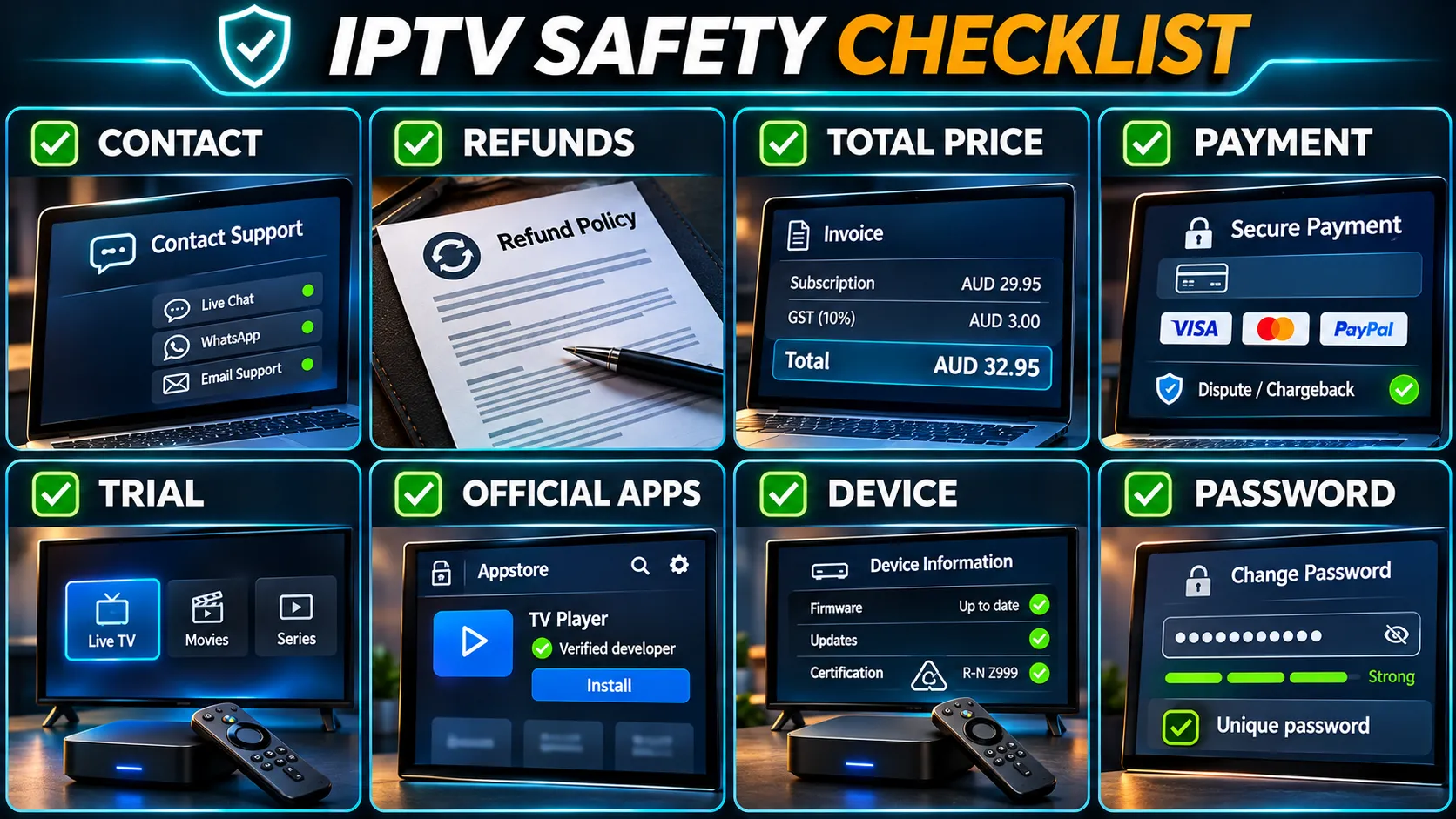
IPTV safety checklist before you buy
Work through these eight checks before you pay for any IPTV service:
- A real way to reach the seller. A contact channel that someone actually answers, such as chat, WhatsApp or email. Send a question before you buy and see how they respond.
- Written refund terms. A refund policy you can read before you order, not a promise made in a chat.
- A clear total price. The full amount for the whole term, in Australian dollars, with no unexplained extras.
- Know how you’re paying. Know which payment method you’re using and whether it offers any way to dispute a charge.
- A trial, if one is offered. A short trial helps you check that the service plays on your own device and connection. It’s a limited test of playback and compatibility; it doesn’t guarantee safety or that the service will keep running.
- Apps from official sources. Your device’s app store first, or the developer’s own site where the developer documents it. Never a modified copy. Our guide explains where to download an IPTV player safely, and on a Fire TV, follow Downloader’s safe-use habits if you install from outside the Appstore.
- A compliant device. Choose a device from a reputable manufacturer that still receives security updates. For electrical equipment subject to Australian compliance requirements, check for the appropriate RCM marking, including on the power supply where applicable.
- A unique password. A password you don’t use anywhere else, and a login you don’t share beyond your plan.
Questions to Ask an IPTV Seller Before You Pay
Before you pay, ask the seller these six questions. A trustworthy seller can answer all of them clearly, in writing:
- Who are you, and how can I reach you after I’ve paid?
- Where can I read your refund terms and privacy policy?
- What is the total price in Australian dollars for the whole term?
- Which payment methods do you accept, and can a payment be disputed?
- Which devices and player apps does your service support?
- How are you authorised to supply the channels you offer?
Vague answers, pressure to pay first, or a refusal to put anything in writing are reasons to walk away. Keep a copy of the answers you receive, together with your payment receipt.
Red Flags That Mean Walk Away
Any one of these is a reason to stop and think again:
- Payment only by crypto, gift cards or similar methods that are hard to reverse, especially to a seller you can’t identify.
- “Lifetime” subscriptions. No one can promise a service will run forever, and these offers often disappear first.
- “Fully loaded” boxes sold with apps pre-installed and promises of free channels.
- No written terms, no refund policy and no privacy policy.
- Pressure to pay quickly, such as offers that expire in minutes.
- Suspiciously perfect reviews, all five stars with no detail.
- Prices far below everyone else’s for long subscriptions, with nothing explaining why.
What to Do If Something Goes Wrong
If you think you’ve paid a scammer or shared details you shouldn’t have, Scamwatch recommends acting quickly. Its guide on what to do if you’ve been scammed sets out these steps:
- Contact your bank or card provider straight away and ask them to stop any transactions. Stop sending money if you’re unsure.
- Get recovery help from IDCARE, Australia’s free identity and cyber support service, on 1800 595 160.
- Report the scam to Scamwatch and warn people around you. You can also make a police report online through cyber.gov.au.
- Watch for follow-up scams, especially anyone who offers to recover your money for a fee.
If you used the same password elsewhere, change it on those accounts too. And if your bank’s response doesn’t resolve the problem, you can complain to the Australian Financial Complaints Authority (AFCA).
How IPTVAUSSIE Handles These Checks
We’d rather you apply the checks above to every seller, including us. Here is what IPTVAUSSIE offers against them:
- A trial before paying: new customers can request a free 24-hour trial to test playback on their own device and connection.
- Payment after setup: we arrange payment only after your subscription is confirmed running on your device.
- Written refund terms: our IPTV refund policy is published on the site before you order.
- Contact options: customers can reach IPTVAUSSIE through WhatsApp and live chat for setup questions and support, as listed on our contact page.
These are features of how we sell, not a guarantee about any service, ours included. You can see plan lengths and prices on our IPTV subscription Australia page.
Whatever you decide, the safest approach is the same: check the seller, know how you’re paying, install apps only from official sources, and keep your account details to yourself.